Multimodal AI on WhatsApp Cloud API (2026): The Complete Guide to Voice Notes, Vision AI Returns & Autonomous E-Commerce Support
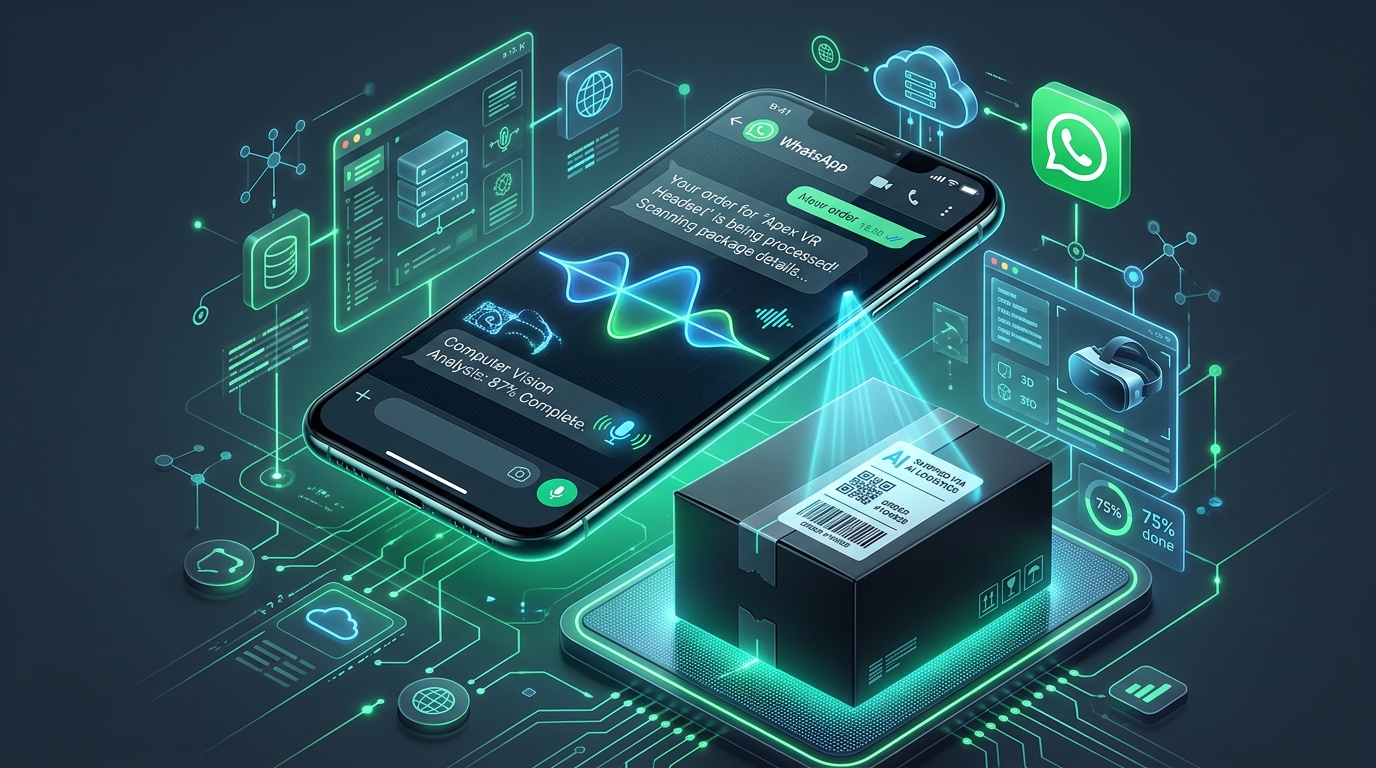
For years, conversational commerce on WhatsApp was confined to a narrow, text-centric bottleneck. Customers were forced to type lengthy descriptions on mobile keyboards, navigate clunky numeric menus ("Press 1 for Shipping, Press 2 for Returns"), or wait days for an email reply to resolve simple product defects. In late 2026, that paradigm has undergone a dramatic transformation. With the widespread adoption of Multimodal AI integrated directly into Meta's WhatsApp Cloud API, customer interactions are now intuitive, sensory-rich, and autonomous.
Today's consumers don't want to fill out web forms. When a shoe doesn't fit, they snap a quick photo. When an item arrives with a damaged zipper, they shoot a two-second video or tap the microphone icon to send a 15-second voice note: "Hey, I received my package this afternoon, but the left seam has torn stitching. Can I exchange this for a fresh pair before the weekend?"
Historically, an audio note or an uploaded photograph paralyzed traditional rule-based chatbots. Today, multimodal agentic frameworks like Kwickbot process voice notes in real-time, inspect damage photos using frontier Computer Vision (powered by Google Gemini), authenticate customer purchases against live Shopify or WooCommerce databases, and autonomously initiate replacement orders—all within seconds in the very same chat thread. In this comprehensive 2026 guide, we explore the architecture of Multimodal WhatsApp AI, break down key e-commerce workflows, analyze Meta's latest Cloud API policy shifts, and provide an actionable blueprint to deploy multimodal support for your brand.
The 2026 Landscape: Meta WhatsApp Cloud API Milestones & Market Drivers
The rise of multimodal customer experience is powered by several critical structural updates across Meta's developer ecosystem throughout 2026:
1. 100% Cloud API Infrastructure & High-Throughput Media Handling
Following the final deprecation of the legacy On-Premises API in October 2025, the WhatsApp Business Platform now runs exclusively on Meta's Cloud API architecture. This eliminates merchant server maintenance, offers 99.99% uptime, and delivers sub-second webhook latency for heavy multimedia payloads—including high-resolution photos, documents, and audio/ogg; codecs=opus voice messages.
2. The October 1, 2026 Service Message Pricing Overhaul
Effective October 1, 2026, Meta introduced billable service messaging for non-template exchanges within the 24-hour customer support window. Under this revised economic model, inefficient chatbots that require 8 to 10 fragmented back-and-forth text messages to diagnose an issue inflate operating costs. Multimodal AI compresses the resolution lifecycle into a single turn: a customer sends a voice note and photo, the AI ingests both simultaneously, checks the catalog, and delivers an immediate resolution, keeping message consumption at peak efficiency.
3. Introduction of the "Meta Business Agent" (MBA) Classification
In July 2026, Meta established the Meta Business Agent (MBA) category to officially delineate autonomous AI-driven customer interactions from human agent responses. To maintain compliance and protect phone quality scores, AI agents must be grounded in verified business logic, provide clear escalation paths, and respect user consent. Kwickbot's native architecture adheres strictly to MBA guidelines while preserving seamless human coexistence.
4. Contact Book & Privacy-First WhatsApp Usernames
Meta's rollout of the WhatsApp Contact Book feature and upcoming support for brand usernames rather than exposed phone numbers marks a strategic shift toward verified, anti-spam conversational ecosystems. Businesses that establish verified, AI-driven conversational trust now enjoy industry-leading delivery rates and customer engagement.
The 4 Pillars of Multimodal AI on WhatsApp Cloud API
Multimodal AI differs fundamentally from traditional chatbots. Rather than parsing single text strings against regex patterns, an enterprise multimodal agent orchestrates four distinct cognitive engines:
Pillar 1: Real-Time Audio Voice Note Transcription & Sentiment Parsing
Voice messaging is the fastest-growing communication modality on WhatsApp globally, especially across high-growth e-commerce markets in India, Southeast Asia, Latin America, and the Middle East. Multimodal AI utilizes speech-to-text (STT) models fine-tuned for conversational nuances, background noise, accents, and multilingual code-switching (such as Hinglish or Spanglish). Beyond literal transcription, the AI gauges tone, pitch, and emotional urgency—detecting frustrated customers before churn occurs.
Pillar 2: Vision AI & Intelligent Visual Inspection
Customer support tickets often hinge on visual evidence: "Is this the wrong color?", "Is the seal broken?", "Does this cable fit my TV port?". Multimodal AI incorporates multimodal vision models to perform instant document and image analysis:
- Defect Verification: Automatically identifies fabric tears, cracked screens, shattered glass, or missing components against reference product images.
- Invoice & Barcode OCR: Extracts order IDs, tracking barcodes, and serial numbers directly from packaging photos, eliminating customer data entry errors.
- Visual Product Search: Allows prospective shoppers to snap a picture of an outfit or home decor item and instantly receive exact or matching catalog recommendations.
Pillar 3: Autonomous Function Calling & Backend Tool Execution
Understanding user intent is useless without the ability to take action. When a customer confirms an exchange via voice note, the AI invokes authorized GraphQL or REST APIs on Shopify, WooCommerce, Shiprocket, or custom ERPs. It checks stock availability, generates return pickup slips, updates inventory counts, and creates exchange orders in real time without human intervention.
Pillar 4: WhatsApp Coexistence 2.0 (Zero-Friction Human Handoff)
True enterprise support requires synergy between AI and human agents. With Kwickbot's WhatsApp Coexistence 2.0, support agents can view conversations and reply from WhatsApp Web or mobile apps. If a query requires human discretion (such as complex warranty disputes or high-value VIP accounts), the AI seamlessly flags the conversation and silences itself the moment a human representative types a reply.
Comparative Analysis: Text Chatbots vs. Rule Flows vs. Multimodal Agentic AI
| Capability | Rule-Based Chatbots | Legacy Text AI (GPT-3/4) | Multimodal Agentic AI (Kwickbot) |
|---|---|---|---|
| Input Modalities | Button clicks & numeric keywords only | Text messages only | Text, Voice Notes, Photos, Videos & PDF Invoices |
| Return & Defect Handling | Directs to external web form link | Asks user to email photos to support | Instant Vision AI inspection + auto-exchange generation in chat |
| Voice Message Support | Unsupported ("Sorry, I didn't understand") | Requires separate STT plugin or fails | Native real-time transcription, sentiment & intent parsing |
| Resolution Speed | High abandonment / 24-48 hr ticketing | 4-8 conversational turns | Single turn (under 5 seconds) |
| Meta 2026 Billing Efficiency | Poor (high friction, customer drop-off) | Moderate (multiple billable service turns) | Optimized (consolidated single-turn containment) |
| E-Commerce Store Sync | None or static CSV uploads | Basic RAG FAQ lookups | Bi-directional Shopify/WooCommerce live GraphQL tool use |
High-Impact Multimodal Workflows Driving E-Commerce Revenue in 2026
How are pioneering D2C brands putting multimodal WhatsApp intelligence into practice? Here are four proven operational blueprints delivering significant ROI:
1. Automated Visual Returns & Defect Claims (Slashes Resolution from 48 Hours to 30 Seconds)
Returns and warranty inquiries represent one of the highest cost centers for e-commerce brands. Traditional return workflows involve multiple days of emailing proof photos, manual customer rep reviews, and back-and-forth messaging. With Kwickbot's Vision AI:
- The shopper sends an image of the damaged product on WhatsApp.
- The AI detects the damaged area (e.g., chipped paint, broken seal, incorrect sizing tag) and cross-references it against the customer's active order history.
- If the claim falls within store warranty parameters, the AI generates a prepaid reverse courier pickup label via courier webhooks (Delhivery, Shiprocket, FedEx) and books the replacement order on Shopify.
- The customer receives an instant confirmation card with tracking details—resolving the ticket with zero human labor.
2. Voice-First Shopping Assistance & Conversational Reordering
For mobile shoppers juggling busy schedules, typing queries about product ingredients, sizing dimensions, or compatibility is tedious. By simply recording an audio note ("Hey Kwickbot, I want to reorder the lavender night serum and add the hydrating face mist if you have it in stock"):
- The AI transcribes the audio, extracts item entities, and checks real-time inventory.
- It builds a draft cart with an applied loyalty coupon code.
- It sends an interactive WhatsApp message with an instant checkout link or native UPI/card payment button, boosting conversions by over 40%.
3. Multimodal Broadcasting with Hyper-Personalized Rich Media Headers
Standard text broadcasts are increasingly filtered out by discerning consumers. Modern WhatsApp broadcasting integrates dynamic image and video headers that feature the customer's name, abandoned items, or recently browsed categories.
When combined with Meta's 72-hour zero-fee conversation window on Click-to-WhatsApp (CTWA) ads, outbound marketing transforms into an interactive shopping conversation. When the customer replies to a broadcast with a question or voice query, the AI seamlessly handles objections, offers bundle recommendations, and completes the sale without incurring external service fees.
4. COD Anti-RTO Shield with Voice Verification
In Cash-on-Delivery (COD) dominant markets, fake orders and buyer remorse lead to staggering Return-to-Origin (RTO) expenses. When an order is placed, Kwickbot sends a verification template with interactive action buttons. If a customer replies with questions or asks to modify their address via voice note, the AI updates the shipping record and confirms delivery readiness, slashing RTO rates by up to 35%.
Technical Architecture: The Multimodal WhatsApp Pipeline
Deploying multimodal AI requires a robust, low-latency processing pipeline that connects WhatsApp Cloud API webhooks with generative intelligence and commerce backends. Here is the architectural flow implemented by Kwickbot:
- Webhook Ingestion: Meta sends a secure POST webhook containing message metadata (text payload, media ID, or audio payload).
- Secure Media Retrieval: The system fetches the media binary directly from Meta's encrypted CDN using authorized System User access tokens.
- Multimodal Ingestion Engine:
- Audio messages are transcoded and streamed into speech-to-text models to extract both transcript text and acoustic emotional sentiment.
- Image and document attachments are preprocessed and fed into Google Gemini Vision models alongside structured prompt directives.
- Contextual Reasoning & Function Calling: The LLM processes customer history, knowledge base policies, and active store data. If actions are required, it executes discrete tools (e.g.,
cancelOrder,checkInventory,createExchange). - Interactive Response Dispatch: The final response is dispatched through the Cloud API as rich interactive elements (Quick Reply buttons, List pickers, or WhatsApp Flows) to minimize friction and ensure single-turn completion.
Best Practices for Deploying Multimodal AI in Your Store
To maximize customer satisfaction and ROI while avoiding common implementation pitfalls, follow these industry-proven best practices:
- Establish Clear Guardrails: Define strict thresholds for autonomous actions. For example, allow the AI to approve instant replacements for items under $75, while automatically flagging higher-value claims for human supervisor review.
- Maintain Grounded Knowledge: Ensure your store return policies, shipping timelines, and FAQs are continuously synchronized with the AI's knowledge base to eliminate inaccurate responses.
- Preserve Natural Human Handoff: Never trap customers in an automated loop. Provide an explicit "Speak to Human Agent" option in every conversational branch.
- Optimize Message Pacing: Group related answers into a single structured interactive message rather than sending multiple disjointed pings, keeping Meta service message billing low and reading experience high.
5-Step Implementation Checklist: Going Live in Under 15 Minutes
- Connect WhatsApp Cloud API: Link your Meta Business Manager account to Kwickbot with one-click Embedded Signup.
- Sync Your E-Commerce Store: Authorize your Shopify or WooCommerce store to automatically index product catalogs, variants, and order webhooks.
- Enable Multimodal Ingestion: Toggle on Voice Note Transcription and Vision AI Defect Verification in your Kwickbot AI Settings.
- Configure Business Rules: Set return windows, damage tolerance rules, and maximum discount thresholds.
- Launch & Monitor: Test your setup by sending a voice note and package photo to your WhatsApp business number, then track first-contact resolution metrics in your live dashboard.
Frequently Asked Questions (FAQs)
Q1: How does Multimodal AI handle customer voice notes in different accents or regional dialects?
Kwickbot uses frontier Large Language Models (including Google Gemini) combined with advanced speech-to-text processing trained on diverse regional datasets. It accurately understands over 50 languages and mixed colloquial speech—such as Hinglish, Spanglish, and regional idioms—ensuring smooth comprehension without requiring formal language from shoppers.
Q2: Can Vision AI accurately identify counterfeit or fraudulently damaged product photos?
Yes. The Vision AI model inspects image metadata, checks for stock photo manipulation, and compares the uploaded defect against reference product blueprints and packaging standards. For borderline or suspicious images, the system automatically routes the case to human customer service specialists via WhatsApp Coexistence 2.0.
Q3: What impact does Meta's October 2026 pricing change have on multimodal support?
Meta now bills for non-template service messages within the 24-hour window. Multimodal AI reduces support expenses by solving customer inquiries in a single turn. Because the AI can evaluate audio and photos simultaneously with store records, it avoids multi-turn message exchanges, saving up to 60% in Meta messaging costs.
Q4: Do customers need to install any new apps or software to use multimodal features?
No. Everything functions natively inside the standard WhatsApp app on the customer's phone. Customers simply tap the microphone icon to record audio or tap the camera icon to send photos exactly as they would with friends and family.
Q5: How does Kwickbot prevent AI hallucinations regarding product pricing or refund promises?
Kwickbot enforces strict Retrieval-Augmented Generation (RAG) and API grounding. The AI cannot invent discount codes, alter prices, or approve refunds beyond predefined thresholds configured in your merchant dashboard. Every action is authenticated against your live store database.
Q6: Can human support agents take over a multimodal conversation if needed?
Yes, seamlessly. With WhatsApp Coexistence 2.0, your human support team can monitor chats in real time from WhatsApp Web, mobile, or the Kwickbot dashboard. If a human agent sends a message, Kwickbot immediately silences the AI for that contact, ensuring no conflicting or overlapping replies.